Cycling Kosovo: Beyond what Google will tell you
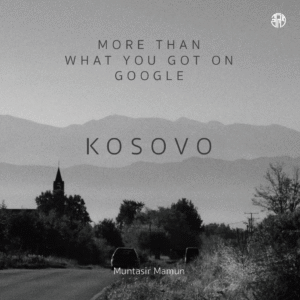
When you search “Kosovo” online, you get the usual: war, disputes, divided lands. But pedaling through this young nation for two weeks on a tandem bike with my partner revealed a different story—one of warm smiles, rugged mountains, and a spirit that hums with life. This isn’t the Kosovo of headlines; it’s a place of quiet beauty and big hearts, much like our own Bangladesh.
PRISTINA: A CITY BUZZING WITH YOUTH
We started in Pristina, Kosovo’s capital, where the streets feel alive, like Dhaka on a good day. Cafés spill with chatter, and young faces—most under 30—carry a spark of hope. The city feels like it’s still finding its feet, but it’s got dreams. Loading our tandem bike, we rolled north to Mitrovica, a town often called “divided” in news stories as the Serbian border is nearby. What we found instead was kindness: a hotel which values its Serbian heritage, staff securing our bike, servers piling our plates with food, and fair prices that reminded us of home. It was a hint of Kosovo’s soul—hospitality that doesn’t care about politics.
SMALL ACTS, BIG HEART
Heading south to Klina, the sun baked the roads, and we stopped in a lively town square. Cafés buzzed, laughter echoed—like a Dhaka mohalla during a festival. Lost and hotel-less, we were helped by a young woman who didn’t just point the way, but walked us to the right road. That small gesture felt like Kosovo itself: warm, human, generous. Later, at Hotel Nora outside town, we found shade and calm, a reminder that Kosovo swings between bustling streets and peaceful plains, much like our own villages and cities.
MOUNTAINS AND MORNING RIDES
The ride to Peja was pure magic. We started at dawn, pedaling through cool air and birdsong, the mountains rising like sentinels. By noon, the sun was fierce, but climbing those gentle slopes felt like a quiet prayer—breath, pedal, repeat. Peja’s chaos was softer than Dhaka’s, with bikes, cars, and people sharing space like old friends. The Old Bazaar stole our hearts—cobbled lanes, Ottoman-style shops, and the smell of grilled meat weaving through history. At the Ethnological Museum, a young guide spoke of Peja’s layered past—faith, culture, time—like she was telling Bangladesh’s own story of resilience.
PRIZREN: WHERE HISTORY SINGS
Day four brought us to Prizren, 80 kilometres south, Kosovo’s beating cultural heart. A sleepy café owner waved us in for coffee from his balcony, and by evening, we were in Prizren’s riverside square—a living, breathing festival. Old Ottoman bridges curved over a calm river, mosques and churches stood side by side, and music floated from every corner. The 1615 Sinan Pasha Mosque glowed in the dusk. We savoured ice cream and kebabs—cheap, delicious, better than Dhaka’s street food. Prizren felt like a poem, warm and enmeshed with history.
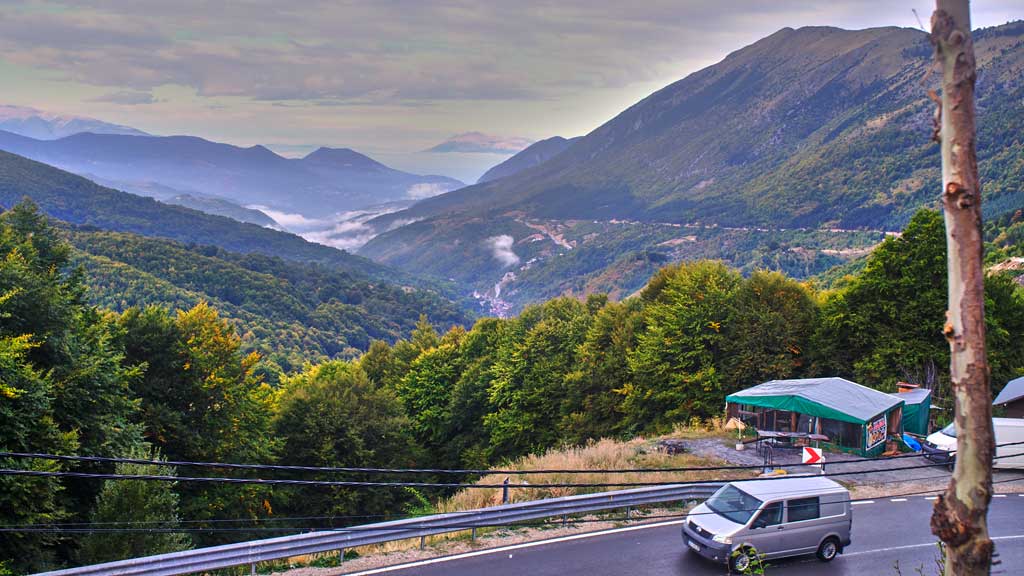
Then came the toughest day: a 1,200-metre climb to Prevalla in the Sharr Mountains. The road twisted up, the air thinned, and stray dogs added a bit of drama. When a pack blocked our path, a truck driver stopped, grinned, and waved us to safety. Shivering in the cold, we laughed through our exhaustion—kindness, again, lighting the way. Prevalla, at 1,500 metres, was a dream: green hills, wooden chalets, and clouds drifting between peaks. Sipping coffee on a terrace, it felt like Darjeeling’s quieter cousin, a place where silence speaks.
DOWN TO KAÇANIK
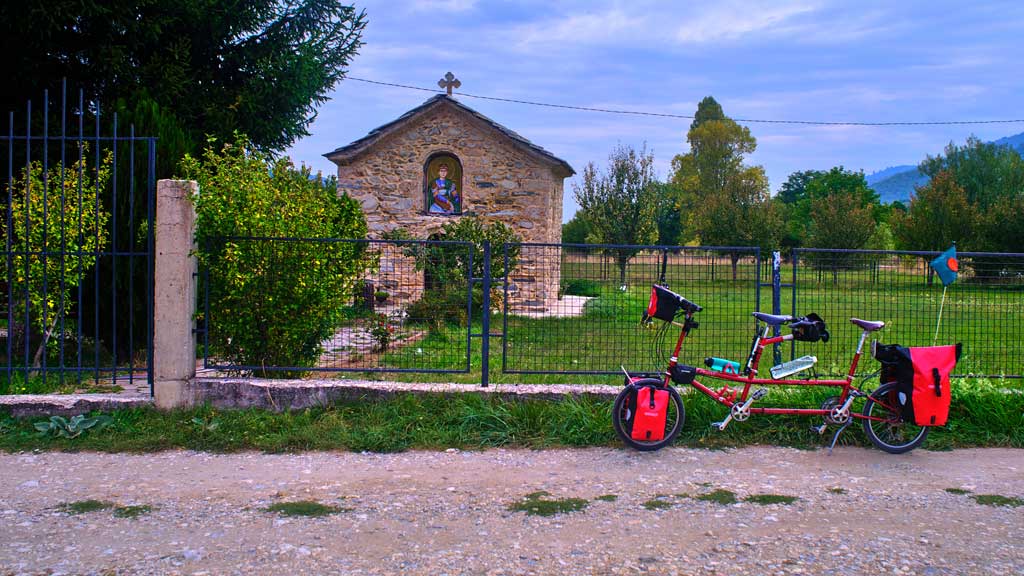
After days of climbing, the descent to Kaçanik was a thrill. Villages and churches dotted the valleys, the air warming as we dropped. At Hotel Europa 92, we joined truckers and families, all sharing the road’s rhythm. The next morning, dogs chased us toward Pristina until city honks replaced their barks—a familiar chaos, like home.
FLAGS AND IDENTITY
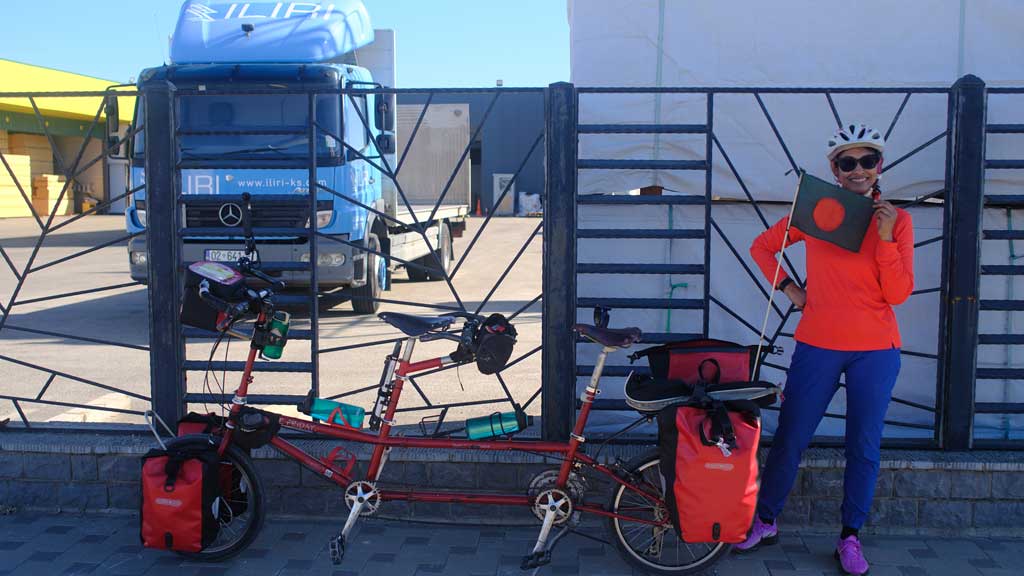
Kosovo’s pride is complex. The Albanian red flag flies more than the blue-and-gold Kosovo one. “It’s complicated,” a family told us with a smile. Most here are ethnic Albanians, their red flag a tie to roots, while the Kosovo flag, born in 2008, is still finding its place. It reminded me of Bangladesh’s early days—a new nation built on older, deeper bonds.
INTO ALBANIA
We took a bus to Tirana, Albania’s capital, knowing our tandem couldn’t tackle 5,000 metres of mountain climbs. The border passage was smooth, despite our Bangladeshi passports making us nervous. Albania’s roads snaked through limestone cliffs and pine forests, a wild beauty. Tirana was a whirlwind—colorful buildings, art-filled streets, and cafés humming like Dhaka’s chai stalls. No one honked, and bikes moved freely, a patience born from years of communist-era car bans.
MOTHER TERESA’S SHARED LEGACY
WINE AND HEROES IN LEZHË
North to Lezhë, Albania’s wine country, we rode past vineyards and olive groves, the scent of Kallmet grapes in the air. Lezhë is also home to Skanderbeg, the hero who fought the Ottomans in 1444. Yet Ottoman flavours—kebabs, burek, coffee—still linger in every meal, proof that culture outlives empires, much like our own Mughal influences.
SHKODËR: A CYCLIST’S HAVEN
Our final stop, Shkodër, felt like home. Bikes rule the streets, cars wait patiently—a cyclist’s Dhaka. At a small restaurant, we ate Tasqebap, tender meat with gravy and rice, tasting like our Mangsher Jhol and rice. As the sun set over Lake Shkodër, the largest in the Balkans, we parked our tandem and let the journey sink in.
BEYOND THE HEADLINES
Kosovo and Albania showed us more than routes—they showed us rhythm. From Pristina’s youthful buzz to Shkodër’s quiet grace, we found kindness at every turn. This isn’t the Kosovo of Google’s grim summaries. It’s a land of mountains, bazaars, and people who welcome you like family. For us Bangladeshis, it’s a reminder: the world’s heart beats in its people, not its headlines.